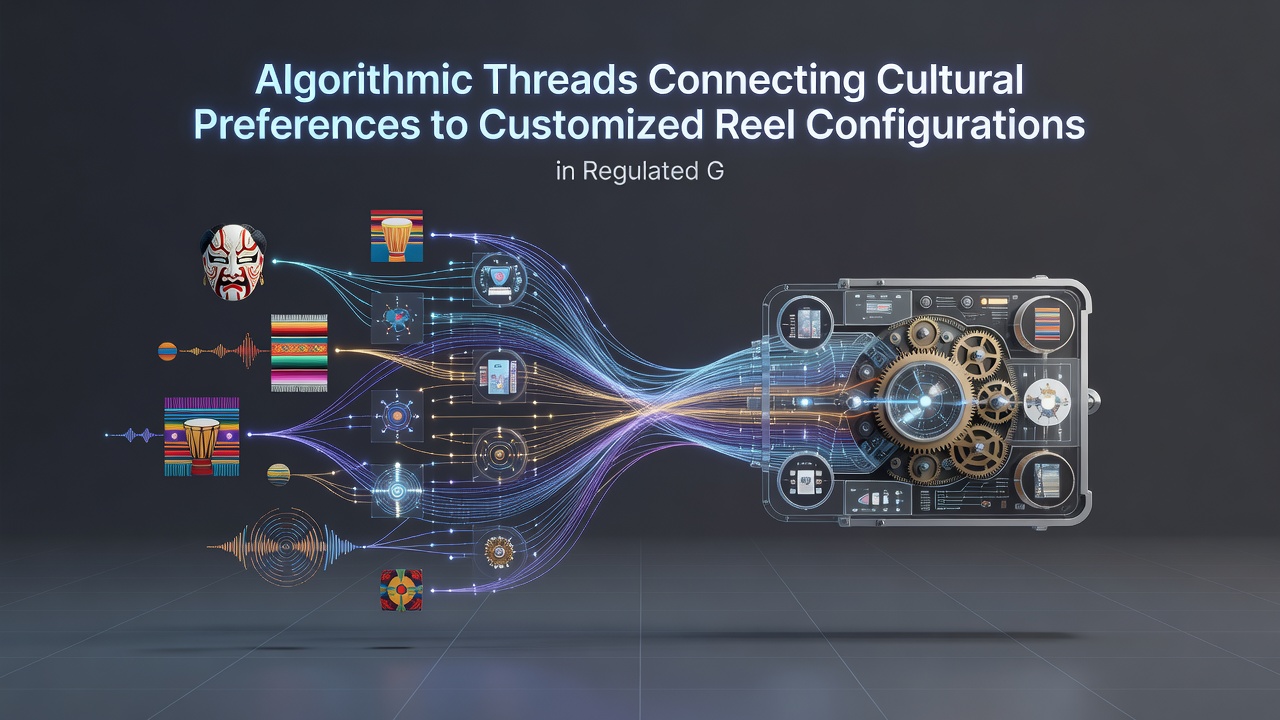
Algorithmic Threads Connecting Cultural Preferences to Customized Reel Configurations in Regulated Global Wagering Ecosystems

Algorithms now map cultural preferences directly onto reel mechanics in regulated wagering platforms, where data streams from player interactions inform symbol selection, payline structures, and volatility settings across multiple jurisdictions. Systems process inputs such as regional iconography preferences, historical betting patterns, and language-based engagement metrics to generate configurations that align with local expectations while satisfying compliance rules.
Operators deploy these threads through machine learning models that segment audiences by geographic and demographic clusters, then adjust reel matrices in real time. One model might increase frequency of culturally resonant symbols like cherry blossoms in East Asian markets or incorporate numeric patterns favored in specific European regions, all within frameworks enforced by bodies such as the Malta Gaming Authority and the Australian Communications and Media Authority.
Data Inputs Driving Reel Adaptation
Player telemetry supplies the primary feedstock for these systems, where session duration, bet sizing sequences, and interaction with bonus triggers feed into predictive engines. Researchers at institutions tracking digital entertainment metrics have documented how cultural motifs correlate with retention rates when integrated into reel layouts, showing measurable shifts in engagement when symbols reflect local festivals or traditional designs.
Regulatory sandboxes established in several Asia-Pacific territories during 2025 now test these adaptive reels under controlled conditions, requiring operators to log every configuration change and demonstrate that modifications do not alter house edges beyond approved thresholds. As of July 2026, updated reporting standards in those jurisdictions mandate quarterly audits of algorithmic decision trees to verify cultural customization remains within licensed parameters.
Technical Architecture Behind Customization
Reel engines operate on modular codebases that separate core random number generation from presentation layers, allowing cultural overlays to modify visual and auditory elements without touching underlying probability distributions. Developers integrate graph neural networks that link player location data to symbol libraries pre-approved by regional regulators, enabling swaps such as replacing generic fruits with regional flora while preserving return-to-player percentages.
Testing protocols require simulation runs across thousands of spins before deployment, with outputs reviewed for compliance against jurisdictional payout tables. Industry reports from the European Gaming and Betting Association note that such modular approaches reduce update cycles from weeks to hours when new cultural datasets become available.
Cross-Border Regulatory Alignment
Jurisdictions coordinate through shared technical standards that permit cultural reel variations while enforcing uniform security and fairness criteria. Canadian provincial regulators, for instance, require cryptographic seals on all configuration files, whereas certain Latin American frameworks emphasize transparency in how preference data enters the adaptation pipeline.
These alignments prevent configuration drift when players access platforms from multiple locations, with geofencing protocols triggering immediate reel recalibrations at border crossings. Data indicates that synchronized systems maintain consistent player experience metrics across such transitions.
Implementation Patterns Observed in 2026
Platform operators in multi-jurisdictional networks have rolled out preference-mapping modules that pull from anonymized aggregate datasets rather than individual profiles, satisfying privacy rules while still capturing broad cultural signals. One documented case involved a Southeast Asian operator adjusting reel volatility downward during major holiday periods after analysis showed preference shifts toward steadier payout rhythms.
Academic papers examining these deployments highlight the role of reinforcement learning in refining symbol weights over successive iterations, with feedback loops closing after each regulatory review cycle. Figures from licensing authorities reveal that approved cultural customizations now account for measurable portions of total reel updates submitted for certification.
Conclusion
Algorithmic connections between cultural data and reel configurations continue to evolve within tightly monitored global wagering environments, where technical modularity meets regulatory oversight. Systems that process these threads operate under documented standards that balance localization with uniform fairness requirements across borders. Continued refinement of input pipelines and audit mechanisms supports ongoing adaptation while preserving compliance integrity.